
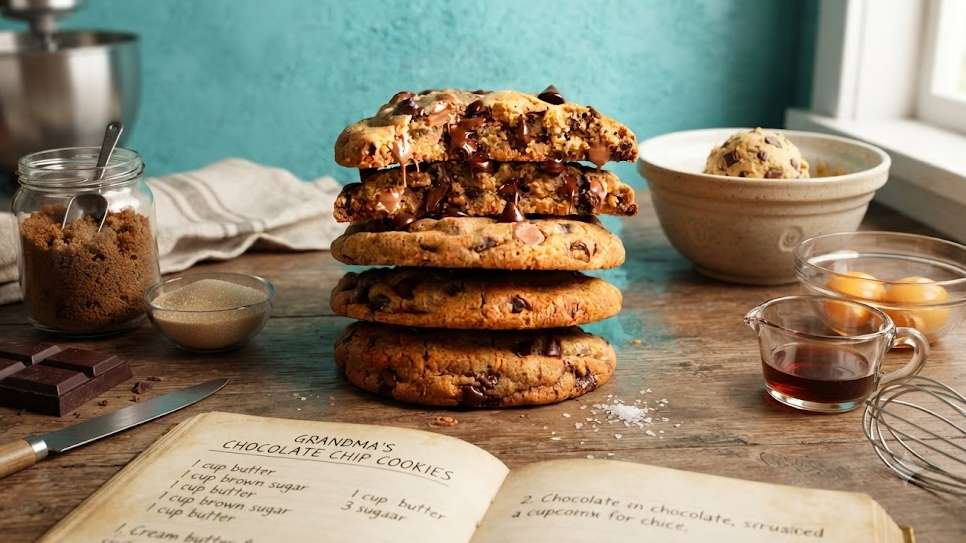
Baking the ultimate chocolate chip cookie is often described as a science, and for good reason. Every single component in your mixing bowl plays a crucial role in determining whether your final batch turns out flat and crispy, cakey and dry, or delightfully soft, thick, and chewy.
If you have ever wondered why your favorite bakery-style cookies have that irresistible, bend-in-the-middle texture while your homemade versions fall short, the secret lies in understanding your ingredients. In this comprehensive guide, we will break down the exact chemistry behind soft and chewy chocolate chip cookies, analyze how individual ingredients impact the final structure, and explore the best substitutions for every dietary need.
1. The Fats: Butter Varieties and Temperatures
Fat is the backbone of cookie texture. It provides richness, flavor, and controls spread. However, the physical state of your fat—and the specific type you choose—will completely change the outcome of your bake.
Melted vs. Softened vs. Browned Butter
-
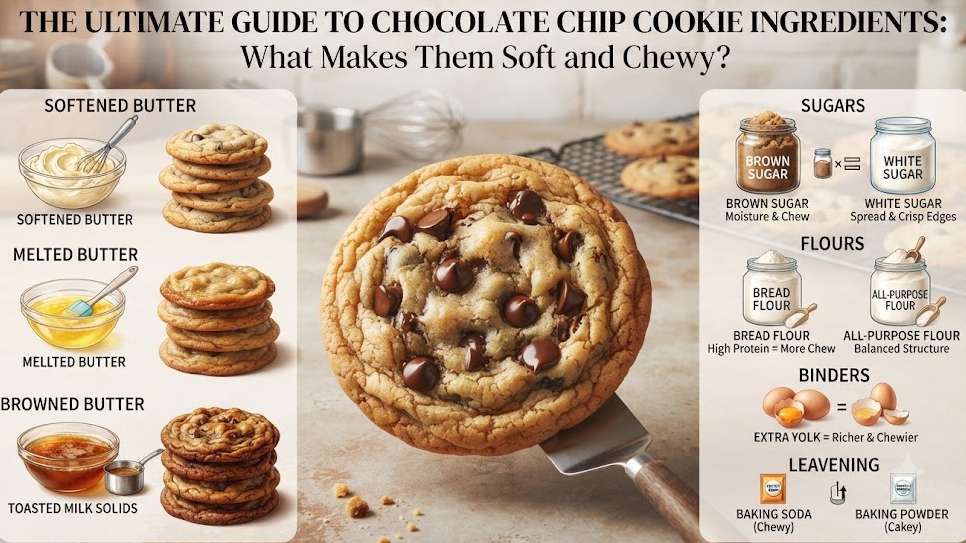
Softened (Room Temperature) Butter: Traditional recipes call for creaming softened butter with sugar. This process beats microscopic air pockets into the fat. When baked, these air pockets expand, resulting in a lighter, taller, and slightly cakey cookie.
-
Melted Butter: Melting the butter dissolves the sugar crystals and removes water content through initial heating. This creates a denser, more compact dough that lacks those trapped air pockets. The result? A denser, chewier cookie with a wonderful caramel-like chew and a shiny, crinkly top crust.
-
Browned Butter (Beurre Noisette): Taking melted butter a step further by cooking it until the milk solids toast yields incredible nutty notes and butterscotch undertones. Because browning evaporates some of the water in the butter, you may need to add a splash of milk back in, but the flavor complexity is unmatched.
Butter Substitutes
If you are dairy-free or vegan, you can substitute butter with coconut oil or plant-based baking sticks.
-
Coconut Oil: Use it in its solid state for structure similar to butter, or melted for a chewier texture. Keep in mind it will impart a subtle coconut flavor unless you use refined coconut oil.
-
Plant-Based Sticks: Look for high-fat vegan butter sticks (around 80% fat) rather than tub margarines, which contain too much water and will cause your cookies to spread too thinly.
2. The Sugars: Brown Sugar vs. White Granulated Sugar
Sugar does far more than just sweeten your cookies; it dictates moisture retention, spread, and crust color. The ratio of brown sugar to white granulated sugar is the single most important factor for achieving chewiness.
The Magic of Brown Sugar
Brown sugar is simply white granulated sugar combined with molasses.
-
Moisture: Molasses is hygroscopic, meaning it attracts and holds onto water. This extra moisture is the primary secret behind a soft, chewy center.
-
Acidity: Molasses is slightly acidic, which reacts with baking soda to help the cookie rise just enough while maintaining a tender crumb.
-
Dark vs. Light Brown Sugar: Dark brown sugar contains a higher percentage of molasses, giving your cookies a deeper, richer toffee flavor and a noticeably softer, chewier texture.
The Role of Granulated White Sugar
White sugar has no molasses. It encourages spreading, helps create crisp edges, and promotes browning via the Maillard reaction. While an all-brown-sugar cookie will be very soft and fudgy, adding a portion of white sugar ensures you get that classic golden, crisp outer perimeter framing a chewy center.
3. The Flours: Protein Content and Structure
Flour provides the gluten network—the structural scaffolding that holds your cookie together while it bakes.
All-Purpose Flour vs. Bread Flour
-
All-Purpose (AP) Flour: With a protein content usually around 10% to 12%, AP flour is the gold standard for a balanced cookie. It provides enough structure to hold the inclusions without making the cookie tough.
-
Bread Flour: Featuring a higher protein content (around 12% to 14%), bread flour develops more gluten when mixed. Swapping a portion of your AP flour for bread flour (e.g., a 50/50 split) dramatically increases the chew factor, giving your cookies an incredible bakery-style pull.
-
Cake Flour: With low protein (around 8%), cake flour yields a very tender, delicate, almost shortbread-like texture. Use this only if you prefer a cakey, soft cookie rather than a chewy one.
Gluten-Free Alternatives
If you are baking gluten-free, a 1:1 baking flour blend containing xanthan gum works best. Because gluten-free flours absorb liquid differently, letting your dough rest for 20 to 30 minutes before baking is essential to eliminate any grittiness and allow proper hydration.
4. The Binding Agents: Eggs and Yolks
Eggs provide moisture, emulsification, and protein structure. However, tweaking how you use eggs can completely transform your cookie texture.
Whole Eggs vs. Extra Egg Yolks
-
Egg Whites: Whites contain water and protein, which provide structural lift and drying power. Too many whites will make your cookies cakey and dry.
-
Egg Yolks: Yolks are packed with fat and lecithin. Adding an extra egg yolk to your recipe introduces extra fat and emulsifiers without adding excess water. This results in a richer, denser, and significantly chewier cookie.
5. Leavening Agents: Baking Soda vs. Baking Powder
Leavening agents create carbon dioxide gas bubbles, helping the cookie expand in the oven.
-
Baking Soda (Sodium Bicarbonate): Requires an acid (like brown sugar or molasses) to activate. It promotes wider spread and deeper browning, which is ideal for chewy, flat-to-medium cookies.
-
Baking Powder: Contains both an acid and a base, meaning it only needs moisture and heat to activate. It gives cookies a vertical lift, making them thicker and fluffier.
For the ultimate chewy cookie with a slight center rise, baking soda is typically preferred over baking powder.
Putting It All Together: The Ultimate Baking Routine
Understanding these ingredients is only half the battle. To maximize chewiness, incorporate these professional habits into your baking routine:
-
Measure by weight: Use a digital kitchen scale for flour and sugar to avoid packing too much flour into your measuring cups.
-
Chill the dough: Let your mixed dough rest in the refrigerator for at least 24 hours. This allows the flour to fully hydrate and concentrates the flavors.
-
Control the heat: Bake at an optimal temperature (around 350°F or 175°C) just until the edges are golden and the centers still look slightly underbaked. They will finish cooking on the hot baking sheet.
Now that you’ve mastered the science behind soft and chewy textures, you are fully equipped to bake like a professional. When you are ready to test your knowledge and see how these principles come together in practice, use a classic chocolate chip cookie recipe to see the difference for yourself.