
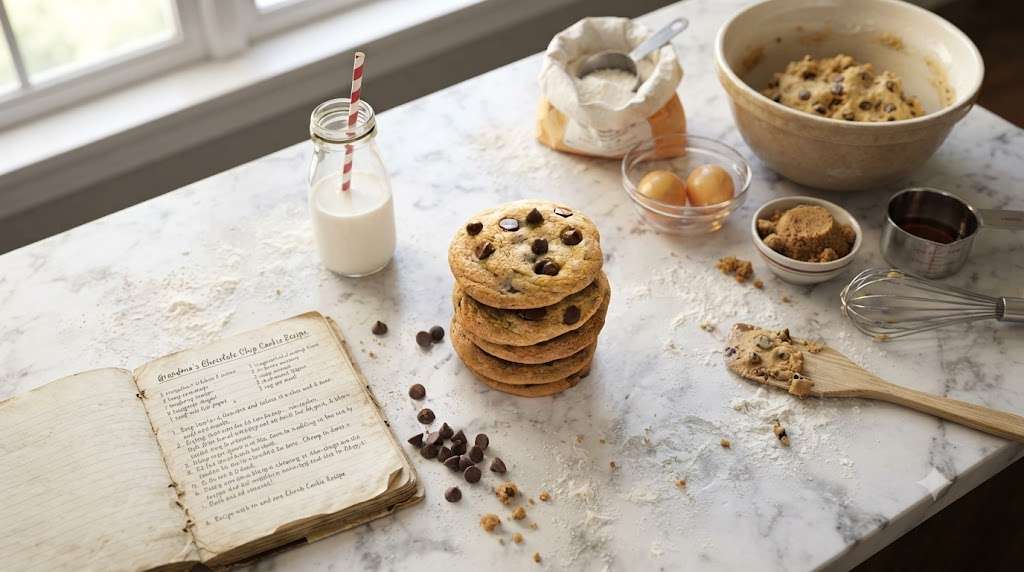
Few things are more comforting than the smell of freshly baked chocolate chip cookies filling the kitchen. Buttery edges, a soft center, and pockets of melted chocolate make this classic treat hard to resist.
Whether you’re baking for your family, preparing a weekend dessert, or simply craving something sweet, a reliable chocolate chip cookie recipe is one of those kitchen staples worth having.
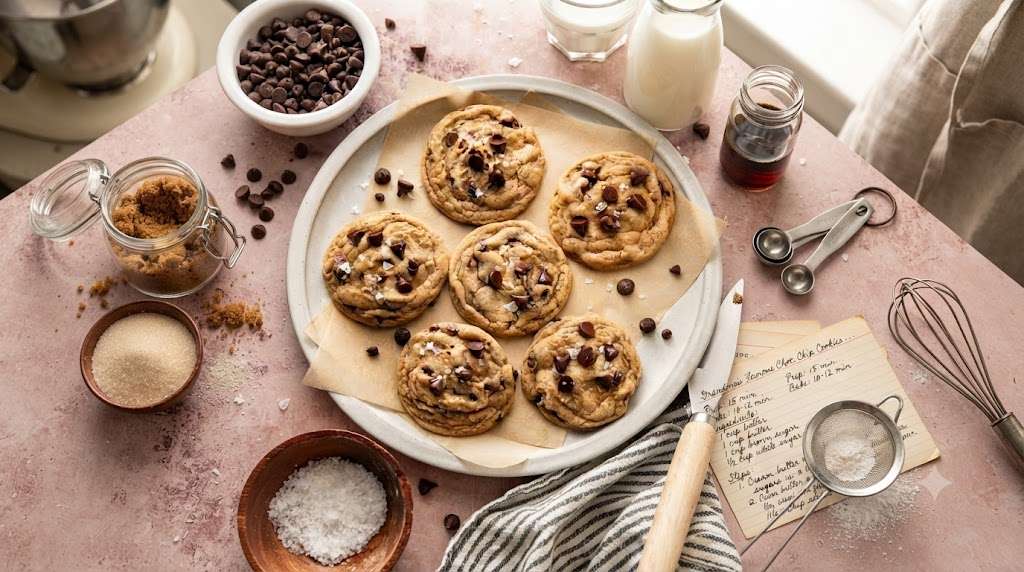
Getting the texture just right, however, can take a little practice. Cookies can spread too much, turn out dry, or lose that soft, chewy center after cooling. The good news is that small details such as butter temperature, flour measurement, chilling time, and baking time can make a noticeable difference.
This recipe combines simple ingredients with a few proven baking techniques to create cookies with lightly crisp edges, a tender center, and plenty of chocolate in every bite.
Nội dung chính
What Makes a Great Chocolate Chip Cookie?
Everyone has a slightly different idea of the ideal cookie. Some prefer thin and crisp, while others want thick centers that stay soft for days.
For this recipe, the goal is a balanced combination of textures and flavors:
- Golden, lightly crisp edges with a buttery finish.
- Soft and chewy centers that remain tender after cooling.
- Caramel-like flavor from a combination of granulated and brown sugar.
- Melted chocolate throughout rather than just a few chips in each bite.
- A subtle vanilla flavor that brings the butter, sugar, and chocolate together.
The result is a classic homemade treat that works equally well for an afternoon snack, holiday baking, or a simple dessert after dinner.
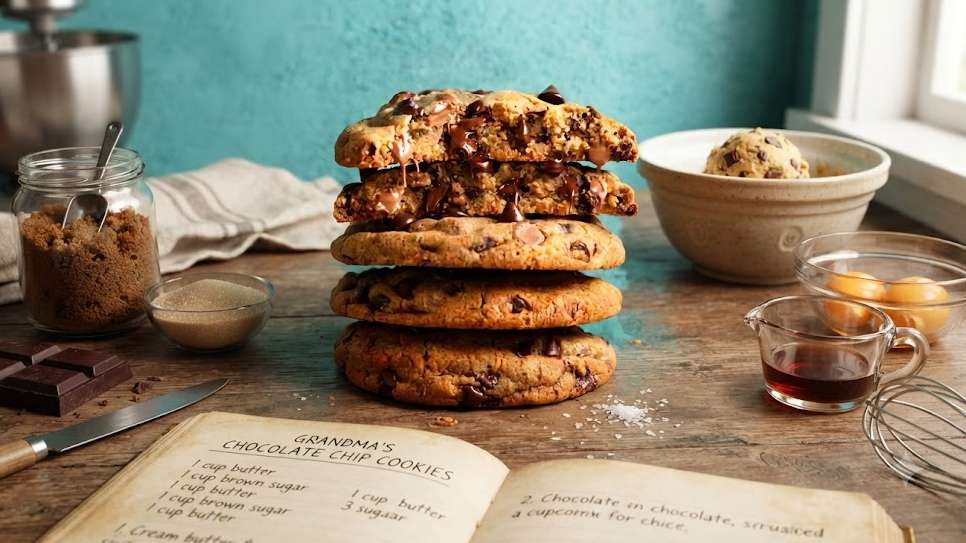
Key Ingredients for This Chocolate Chip Cookie Recipe
Each ingredient has a specific purpose, so measurements and preparation matter more than you might expect.
Unsalted Butter
Butter contributes flavor, moisture, and structure while helping the edges develop a golden color. Unsalted butter is preferred because it gives you better control over the amount of salt in the dough.
Let the butter soften naturally at room temperature until it is pliable but not melted. If it looks shiny, greasy, or partially melted, it is too warm for proper creaming.
Granulated and Brown Sugar
Using two types of sugar gives these cookies their balanced texture.
Granulated sugar encourages spreading and helps create lightly crisp edges. Dark brown sugar contains more molasses, which adds moisture, chewiness, and a deeper caramel flavor.
Light brown sugar can be substituted if that is what you have available. The flavor will simply be a little milder.
Eggs and Egg Yolk
Eggs help bind the dough while contributing moisture and structure. This recipe uses two large eggs plus one additional egg yolk.
The extra yolk adds fat without introducing as much additional egg white, helping create a richer and more tender center.
Pure Vanilla Extract
Vanilla enhances the flavor of the butter, brown sugar, and chocolate. Pure vanilla extract works especially well here, although imitation vanilla can also be used if necessary.
All-Purpose Flour
All-purpose flour gives the dough its structure. Accurate measuring is important because too much flour can leave the finished cookies dense or dry.
For the most consistent results, use a kitchen scale. If measuring by volume, fluff the flour first, spoon it into the measuring cup, and level the top with a straight edge rather than scooping directly from the bag.
Baking Soda and Cornstarch
Baking soda provides a small amount of lift and contributes to browning.
Cornstarch helps create a softer, more tender texture. A small amount is enough to make a noticeable difference without making the cookies cakey.
Chocolate Chips or Chunks
Semi-sweet chocolate chips are an easy classic choice. For more variety, combine them with chopped dark chocolate.
Chocolate chunks tend to create larger melted pockets, while chips maintain their shape more consistently during baking. Using both gives you a nice combination of textures.
Tips for Better Homemade Cookies
A few simple techniques can make this chocolate chip cookie recipe much more reliable.
Chill the Dough
Chilling is one of the most useful steps. Refrigerate the dough for at least 1 hour, or up to 48 hours if you want to prepare it ahead of time.
The cooler dough spreads more slowly in the oven, while the resting period allows the flour to absorb moisture. A longer rest can also deepen the overall flavor.
Use Properly Softened Butter
Butter should be soft enough to blend easily with the sugar but still hold its shape. Melted butter changes how the dough behaves and can result in flatter cookies.
Avoid Overmixing
Once the flour is added, mix only until no dry streaks remain. Excessive mixing can develop more gluten, which may produce a firmer, tougher result.
Line the Baking Sheets
Parchment paper or silicone baking mats help prevent sticking and make cleanup easier. They also provide a more consistent surface for baking.
Don’t Overbake
The centers should still look slightly soft when the cookies come out of the oven. They will continue to set from the residual heat of the baking sheet.
For softer centers, it is better to remove them slightly early than to leave them in the oven until the middle looks completely firm.
Chocolate Chip Cookie Recipe
Prep time: 20 minutes
Chill time: 1 hour
Bake time: 10–12 minutes
Yield: About 18–20 large cookies
Ingredients
- 1 cup (226g) unsalted butter, softened
- 3/4 cup (150g) granulated sugar
- 3/4 cup (165g) packed dark brown sugar
- 2 large eggs, room temperature
- 1 additional large egg yolk, room temperature
- 2 teaspoons pure vanilla extract
- 2 1/4 cups (280g) all-purpose flour
- 1 tablespoon cornstarch
- 1 teaspoon baking soda
- 3/4 teaspoon fine sea salt
- 1 1/2 cups (270g) semi-sweet chocolate chips or chopped chocolate
- Flaky sea salt, optional
How to Make Chocolate Chip Cookies
1. Cream the Butter and Sugar
Place the softened butter, granulated sugar, and dark brown sugar in a large mixing bowl.
Using a handheld electric mixer or stand mixer fitted with a paddle attachment, beat on medium speed for about 2–3 minutes, until the mixture looks creamy and slightly lighter in color.
2. Add the Eggs and Vanilla
Add the two eggs, additional egg yolk, and vanilla extract.
Beat on medium-high speed for about 1 minute, stopping once to scrape down the sides of the bowl. Continue until the mixture is smooth and well combined.
3. Mix the Dry Ingredients
In a separate bowl, whisk together the flour, cornstarch, baking soda, and salt.
This distributes the leavening agent and salt throughout the flour before they are added to the wet mixture.
4. Make the Dough
Reduce the mixer speed to low and gradually add the dry ingredients.
Mix just until the flour is incorporated. Do not continue mixing once the dough comes together.
Add the chocolate chips or chopped chocolate and gently fold them in with a spatula.
5. Chill the Dough
Cover the bowl tightly and refrigerate the dough for at least 1 hour.
If preparing the dough a day ahead, you can leave it refrigerated for up to 48 hours.
6. Portion the Dough
Preheat the oven to 350°F (175°C).
Line two large baking sheets with parchment paper or silicone baking mats.
Scoop approximately 3 tablespoons (about 50g) of dough for each cookie. Roll each portion lightly between your hands and place the balls on the prepared baking sheets, leaving about 2 inches between them.
7. Bake
Bake one sheet at a time on the center rack for approximately 10–12 minutes.
The edges should be lightly golden and set, while the centers should still appear slightly soft. Avoid waiting until the middle looks completely baked.
8. Cool
Leave the cookies on the baking sheet for about 5 minutes. During this time, the centers will continue to set while remaining tender.
Transfer them to a wire rack to cool completely.
For an extra sweet-and-salty finish, add a small pinch of flaky sea salt while the cookies are still warm.
How to Store Chocolate Chip Cookies
Proper storage helps preserve their texture for several days.
At Room Temperature
Place completely cooled cookies in an airtight container and keep them at room temperature for up to 5 days.
For softer cookies, place a small piece of plain white bread in the container. The bread releases moisture gradually, helping the cookies stay tender.
Freezing Baked Cookies
Allow the cookies to cool completely before placing them in a freezer-safe container or bag.
They can be frozen for up to 3 months. Thaw at room temperature before serving.
Freezing Cookie Dough
Portion the dough into individual balls and arrange them on a baking sheet. Freeze for about 1 hour, or until firm.
Transfer the frozen dough portions to a freezer-safe bag or container. When you’re ready to bake, place them directly on a prepared baking sheet and add approximately 2–3 minutes to the baking time.
Common Problems and How to Fix Them
The butter may have been too warm, the dough may not have been chilled long enough, or the flour measurement may have been too low. Chilling the dough before baking usually helps control excessive spreading.
Too much flour or excessive baking time can make cookies dry. Measure flour carefully and remove the cookies when the centers still look slightly underdone.
Too much flour or excessive mixing can produce a thicker, more cake-like texture. Make sure your flour measurement is accurate and mix only until the dry ingredients disappear.
Can I use light brown sugar instead of dark brown sugar?
Yes. Light brown sugar works well as a direct substitute. The finished cookies will have a slightly lighter molasses flavor but should still have a soft and chewy texture.
Final Thoughts
A dependable chocolate chip cookie recipe does not require complicated ingredients or advanced baking skills. The biggest differences often come from a handful of small details: measuring flour accurately, using properly softened butter, chilling the dough, and taking the cookies out of the oven at the right moment.
Once you have the basic method down, it is easy to make the recipe your own. Try different chocolate varieties, add toasted nuts, or finish the warm cookies with a little flaky sea salt.
Sometimes, the simplest homemade desserts are the ones that disappear fastest.